

It’s a fair question, and more Practice Managers are asking it every month: if calls are the problem, why not just hand them to an AI answering service? No sick days, no training, no shift to cover. On paper, it sounds like the whole missed-call problem solved in one decision.
It’s worth answering honestly, because the answer isn’t “no” it’s “it depends what you’re actually asking it to do.”
What an AI receptionist is genuinely good at
Give an AI answering service for your medical practice a clear, simple job, and it will do it reliably, at any hour, without ever putting a caller on hold. Confirming an appointment time. Taking a message when every line is full. Answering “what are your opening hours” for the fortieth time that week. These are real calls, they make up a real share of your volume, and an AI system can pick every one of them up instantly, every time.
That’s not a small thing. A practice that was previously losing those calls to a busy signal now isn’t. That’s genuine ground recovered.
Where it quietly runs out of road
The harder calls are a different shape. An anxious patient who isn’t sure if her symptoms need today’s appointment or next week’s. A regular who always asks for the same doctor and needs someone to remember that, not look it up. Someone upset, running late, or asking a question that doesn’t fit neatly into a menu of options.
An AI system can route that call somewhere. It can’t carry what a person who knows your practice carries – the tone to use with a worried caller, the judgement to bump someone into today’s list, the relationship a regular patient has built with your team over years. That’s not a technology gap that closes with the next model update. It’s a different kind of job.
The real question isn’t AI versus people
Framed as a straight choice – AI or humans – the question is a false one, and it usually ends with practices picking a side and living with that side’s gap. The more useful question is simpler: which calls in your day are simple and repeatable, and which ones need someone who actually knows the person on the other end?
Most practices have never actually separated those two piles. Until you do, “should we get an AI answering service” and “should we hire another receptionist” are both guesses, because neither is aimed at where your calls actually are.
What it looks like done properly
The practices handling call volume best aren’t choosing AI over people, or people over AI. They’re using both, deliberately, for the calls each one is actually suited to AI absorbing the repeatable, time-sensitive load, and a trained person carrying the calls that need judgement, memory, and reassurance. One of our practices fields 500+ calls a day through just seven incoming lines this way, and the reason isn’t a bigger team or a smarter bot it’s that someone mapped which calls needed which kind of help before deciding what to automate. We’ve written about that mapping process in more detail here.
Every Hero we place already works this way backed by the same AI tooling used to lift the repeatable work, freed up to spend their actual attention on the calls where a person genuinely matters. It’s not a choice between the two. It’s knowing which one a given call needs.
Put your own calls into those two piles
If you’re weighing an AI answering service for your own practice, the honest first step isn’t picking a vendor it’s finding out how many calls you’re actually missing, and what kind they are. That number tells you far more about what to automate than any product demo will.
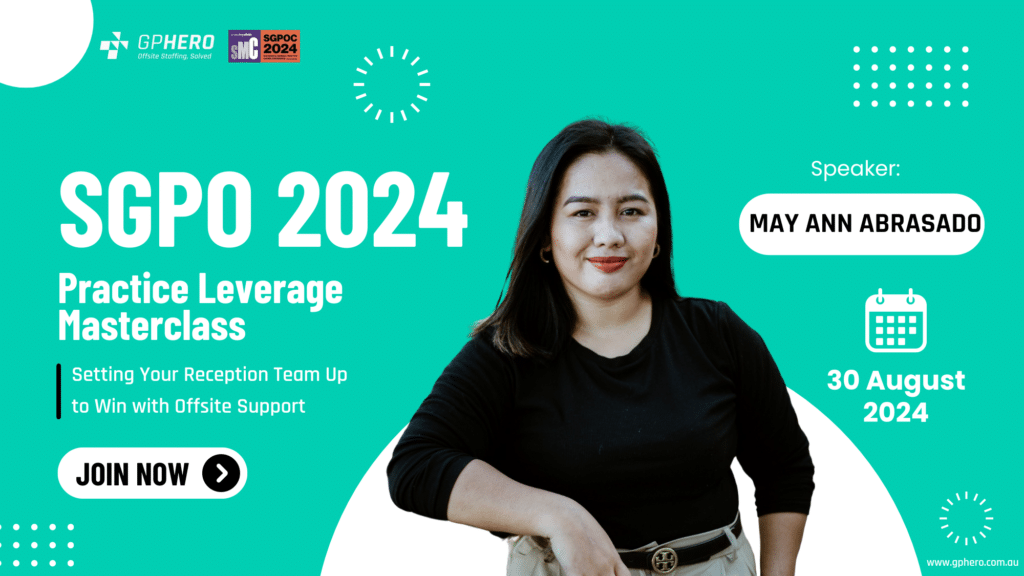
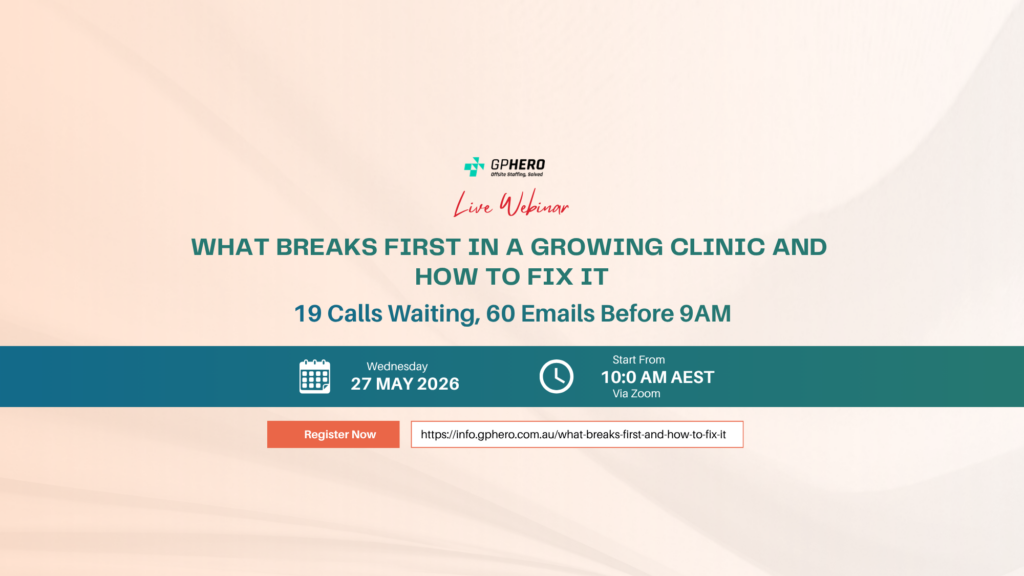
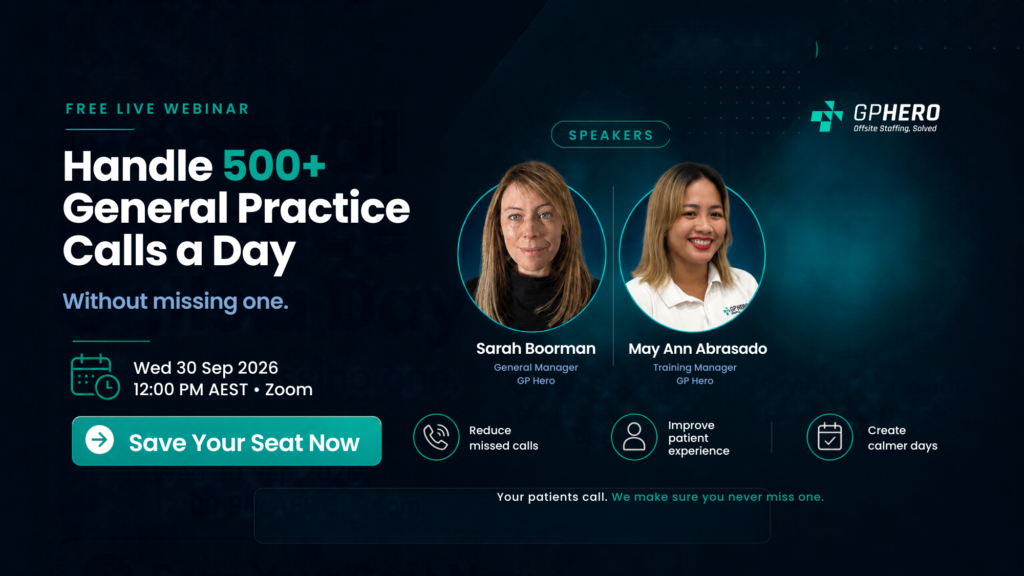
Bring that number to Handle 500+ Calls a Day, Without Missing One, free on Zoom, Wednesday 30 September. We’ll walk Practice Managers and Practice Owners through exactly where their calls are going, which ones genuinely suit automation, and which ones still need a person who knows the practice.
Save your free seat → · Wednesday 30 September · 12:00–1:00 PM AEST · Live on Zoom · Can’t make it live? Register anyway and we’ll send you the recording.
An AI receptionist can answer a phone. Whether it can answer for your practice is a different question and it’s one worth actually thinking through, rather than guessing at.