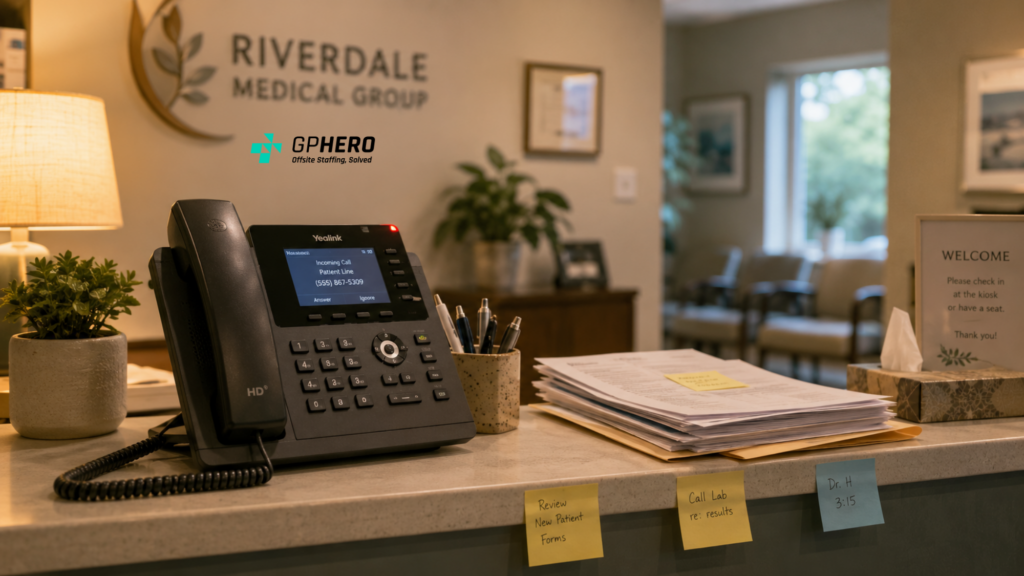

“We already have a phone tree” is one of the most common answers a Practice gives when missed calls come up and it’s a fair one. A phone tree at your medical practice feels like the obvious fix: press 1 for reception, press 2 for results, press 3 for the nurse. Calls get sorted. Surely that’s the problem solved.
Here’s the distinction worth pausing on: a phone tree routes a call. It doesn’t answer one. And for a patient sitting on hold, that difference is the entire experience.
What a phone tree actually does
A tree is a sorting system, not a person. It takes an incoming call and decides where it should go next which is genuinely useful when every line is free and the wait is short. The trouble starts when every line isn’t free, which for most Practices is most of the morning.
At that point, the tree doesn’t fix the bottleneck. It just gives the caller somewhere to wait inside it – a queue with hold music instead of a busy tone. Technically, the call has been “handled.” Nobody hung up on her outright. But she still didn’t reach a person, and from her seat, that’s the only part that matters.
Where the tree quietly loses the call
This is the part that doesn’t show up in any report: a caller who waits through your tree, sits in the queue, and hangs up before anyone picks up hasn’t lodged a complaint. She hasn’t left a voicemail. She’s simply gone often to the clinic down the road, which answered on the second ring.
Your system, on paper, did its job. It routed her correctly. It just never got her to a human being, and a phone tree has no way of telling you that happened. The queue backing up, the caller waiting, the eventual hang-up none of it leaves a trace, which is exactly why “we already have a phone tree” so often coexists with a real, invisible missed-call problem underneath it.
The bigger-team trap
The next instinct, once the tree’s limits become obvious, is to add headcount another receptionist, another line. That can genuinely help. It can also just mean more people working inside a system that was never actually mapped, answering calls in the order they arrive rather than the order that matters, with no clearer picture of where the leaks are than before.
More hands don’t fix a flow problem. They just mean the same leak has more people standing next to it.
What actually closes the gap
The Practices that stop losing calls to their own phone tree don’t throw more of it at the problem they map what’s really happening underneath it. Where calls need to go, when, and to whom, before deciding what a tree should handle and what only a person can. One of our Practices now fields 500+ calls a day through just seven incoming lines this way not because they added more infrastructure, but because someone finally mapped the flow properly. We’ve written about that mapping process, and the three leaks it usually finds, here.
That’s the difference between a tree that sorts calls and a system that actually answers them.
Put a number on your own tree
If you’ve read this far wondering whether your own phone tree is quietly doing the same thing, start by working out how many calls you’re actually missing the tree can’t tell you, but a week of honest observation can.
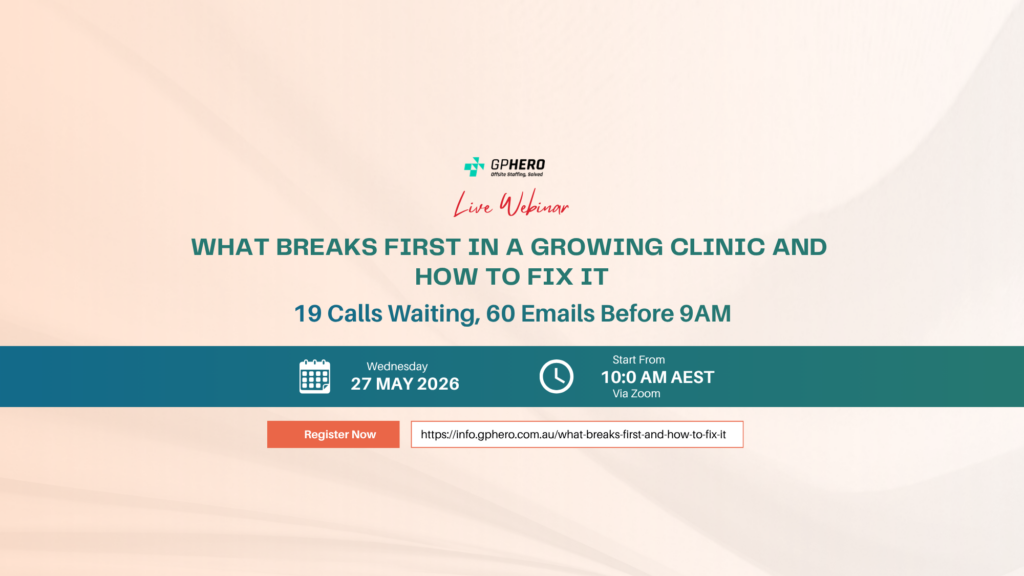
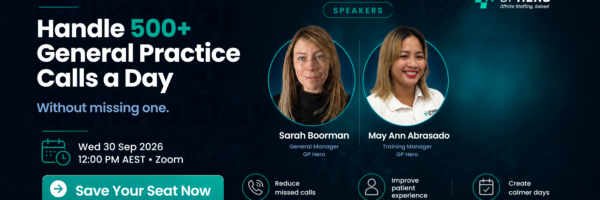
Then bring that number to Handle 500+ Calls a Day, Without Missing One, free on Zoom, Wednesday 30 September. We’ll walk Practice Managers and Practice Owners through exactly where their calls are leaking tree included and what handling it properly looks like inside their current team.
Save your free seat → · Wednesday 30 September · 12:00–1:00 PM AEST · Live on Zoom · Can’t make it live? Register anyway and we’ll send the recording.
A phone tree was never built to answer a call. It was only ever built to route one and knowing that difference is the first step toward actually closing it.