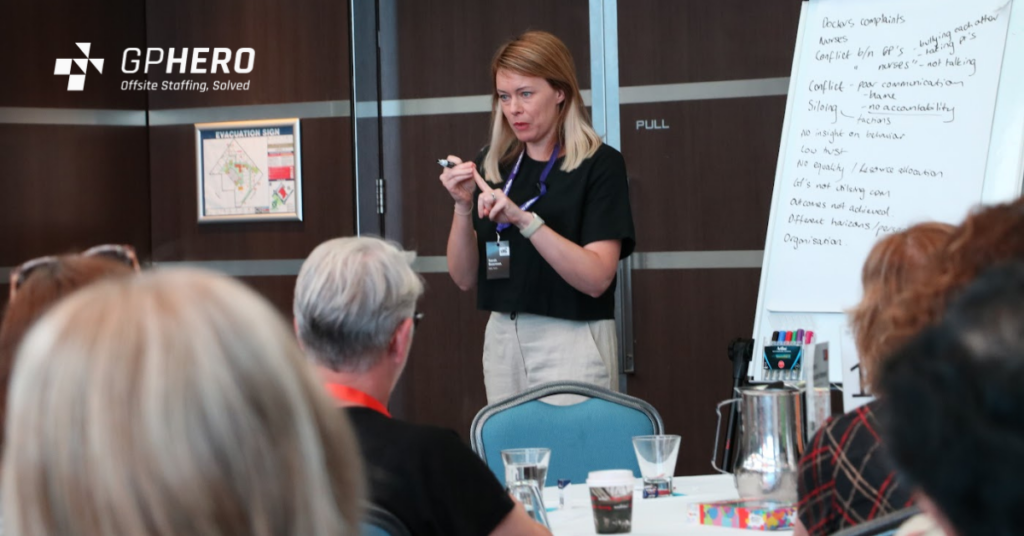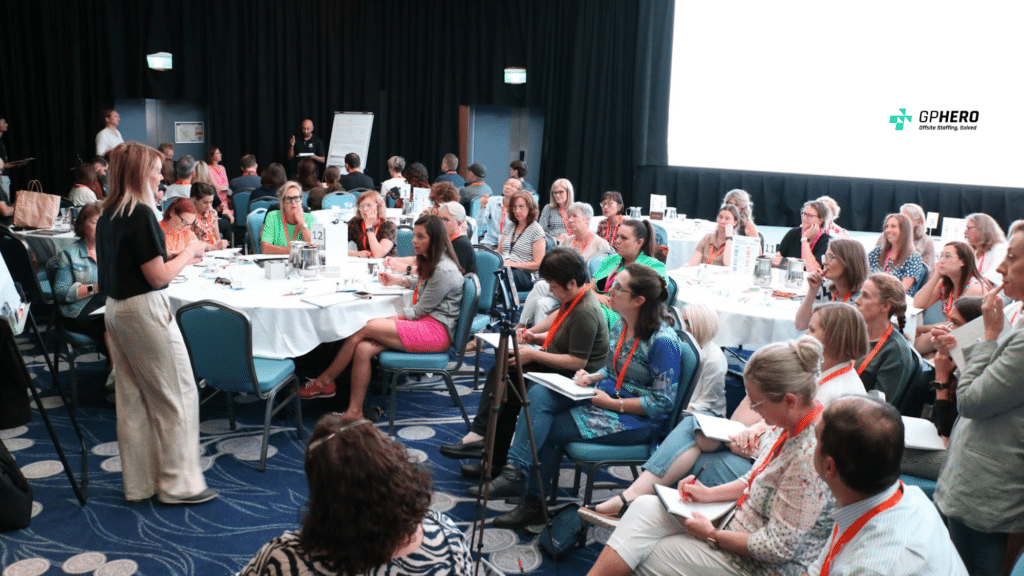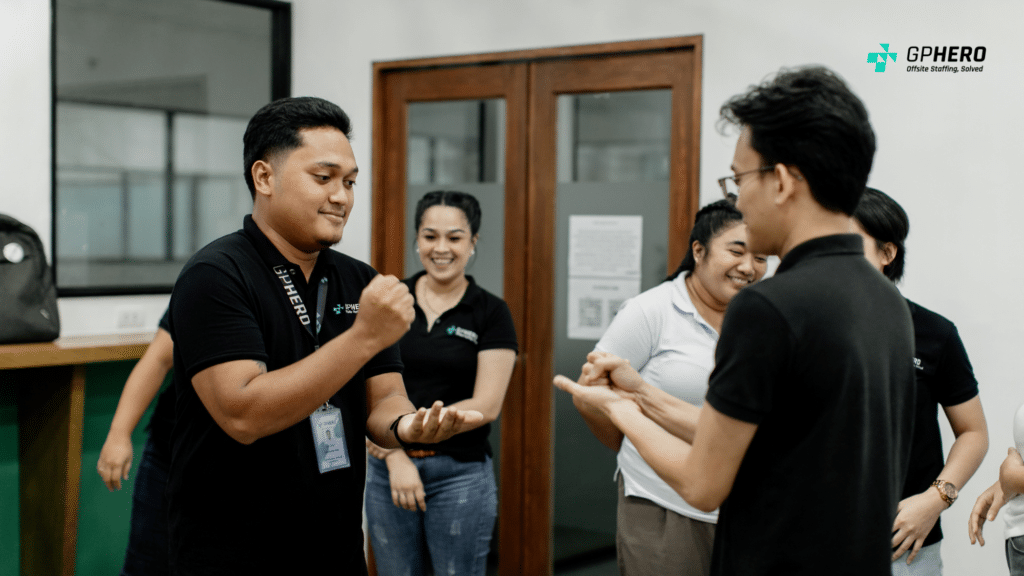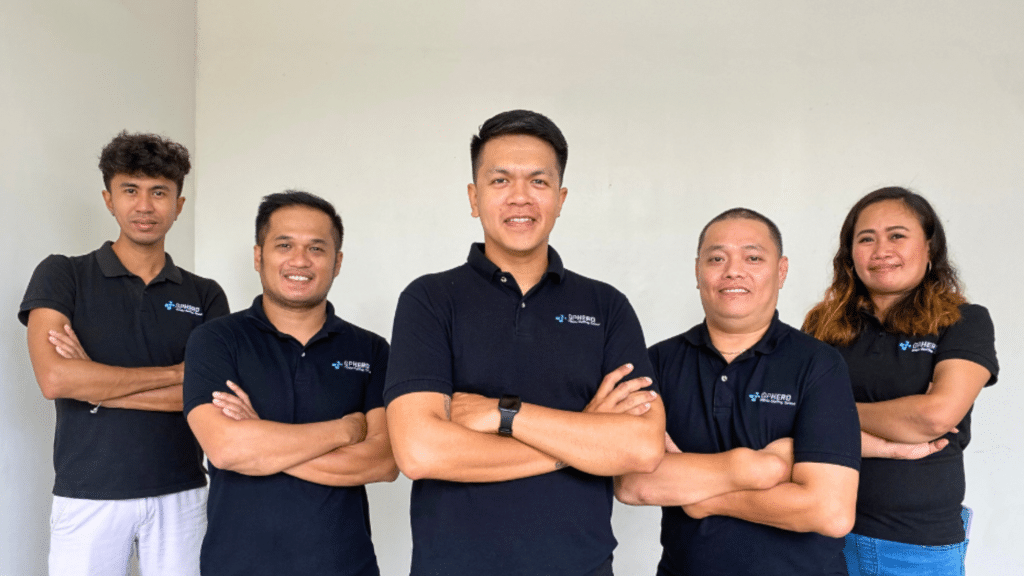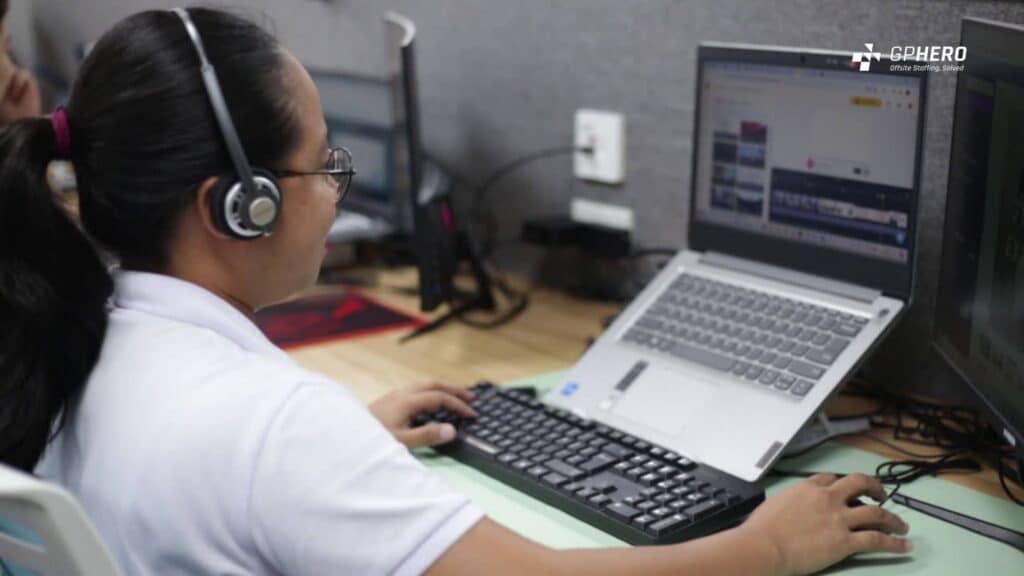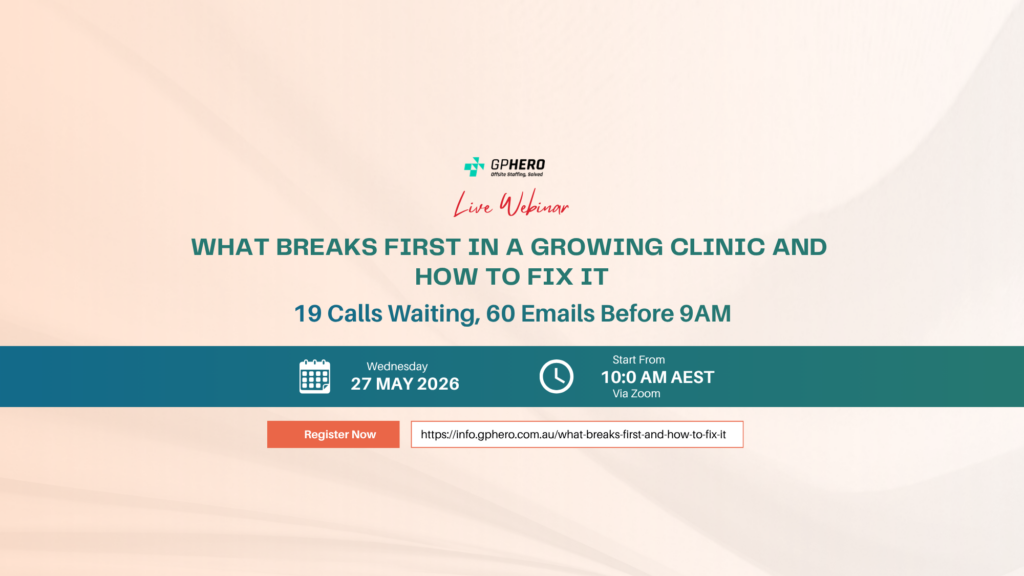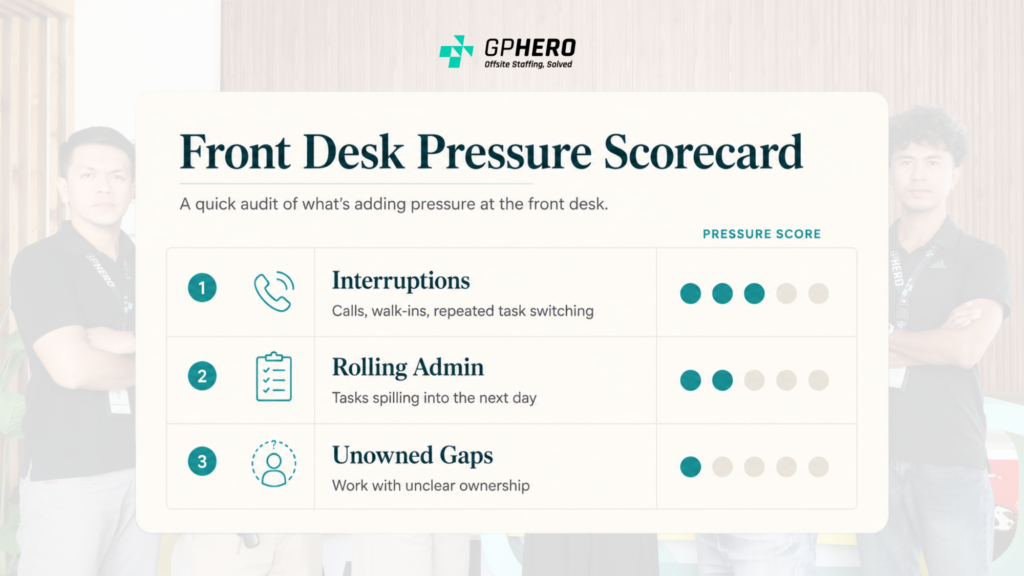

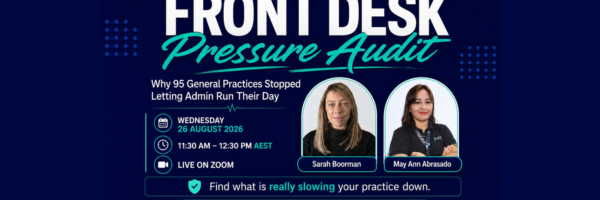
On 26 August, GP Hero hosted Why 95 General Practices Stopped Letting Admin Run Their Day: The Front Desk Pressure Audit – What Is Really Slowing Your Practice Down?
The conversation focused on a problem many Practice Managers know well:
The team is working hard, but the Practice still feels like it is constantly catching up.
Phones keep ringing. Recalls need actioning. Inbox work builds up. Doctors need follow-up. Staff need answers. And when something falls through the cracks, the Practice Manager often becomes the person responsible for picking it back up.
But one of the strongest themes from the webinar was that this is not always a staffing problem.
Sometimes it is a visibility, ownership and capacity problem.
Here are some of the biggest lessons from the session.
1. Delegation Does Not Mean Teaching Every Step Yourself
One of the first ideas discussed was the difference between delegating a task and personally training someone through every individual step.
When Practice Managers think about delegation, it can immediately sound like more work:
“Now I have to explain everything.”
“Now I have to train another person.”
“Now I have to check whether they did it correctly.”
But GP Hero Training Manager May Ann Abrasado explained that good delegation starts somewhere simpler:
Be clear about what “done” looks like.
Once the desired outcome is clear, the workflow can be mapped, documented and tracked so the task no longer depends on one person remembering every step.
That shift matters.
Instead of work living in somebody’s head, the Practice creates visibility around:
- who owns the task
- what has been completed
- what remains outstanding
- what the expected outcome is
- when the loop is actually closed
Because if nobody can see the work, it becomes much harder to manage it.
2. Where Is Work Hiding in Your Practice?
One of the questions asked during the webinar was:
Where is work hiding in your clinic?
It might be sitting in:
- Best Practice or F8 messages
- Outlook
- spreadsheets
- verbal handovers
- inboxes
- personal reminders
- or simply inside the head of the one person who “knows everything”
The problem is not necessarily that people are not doing their jobs.
The problem is that work can become scattered across so many places that no one has a complete view of what is done, what is pending and who owns the next step.
That creates invisible work for the Practice Manager.
They check.
They chase.
They remind.
They clarify.
They follow up.
And every unfinished task becomes another mental “open tab” they have to keep running in the background.
3. Is Your Practice Process-Led or Person-Dependent?
Most Practices have someone everyone relies on.
They know how the systems work.
They remember which doctor prefers what.
They know where the documents are.
They know which task still needs following up.
During the webinar, that person was jokingly called “Michelle.”
The problem is not having experienced, knowledgeable people.
The risk comes when the Practice can only move as quickly as that one person is available.
If everyone has to wait for Michelle to answer a question, find information or complete one part of a workflow, Michelle becomes the bottleneck.
That dependency becomes especially obvious when somebody takes leave or leaves the Practice entirely.
May shared the example of a clinic facing exactly that situation: a long-term staff member who “did two jobs easily” was preparing to leave, and suddenly the Practice realised how much knowledge had never been turned into a repeatable process.
The solution discussed was simple in concept:
Document. Train. Verify.
Document how the work should happen.
Train people to that process.
Then verify against clear standards and KPIs so the workflow does not gradually drift over time.
The goal is not to make people replaceable.
It is to make sure the Practice does not lose its operational knowledge whenever one person is unavailable.
4. Your Practice Manager Should Not Be the Clinic’s Safety Net
One of the most relatable stories shared during the webinar was about a Practice Manager in a growing clinic.
On paper, the Practice was doing well.
Appointments were full.
Patient demand was strong.
The clinic was growing.
But behind the scenes, the Practice Manager had become the safety net for almost everything.
If the phones overflowed, she stepped in.
If recalls fell behind, she stepped in.
If the inbox needed attention, she stepped in.
If a staff member had a question, she answered it.
If a doctor needed something followed up, she chased it.
Eventually, she described the situation like this:
She did not feel like she was managing the clinic anymore. She felt like she was rescuing it every day.
That is an important distinction.
The problem was not effort.
The Practice had grown, but the administrative system carrying the workload had not grown with it.
The solution was not to throw random help at the Practice.
Instead, the work was mapped:
- what needed to stay onsite
- what could be delegated
- where ownership needed to become clearer
- where a trained GP Hero could take responsibility without creating more work for the Practice Manager
The support started with specific repeatable workflows, including recalls, inbox administration, document importing and follow-up tasks.
Over time, the Practice Manager stopped being the automatic backup for every administrative problem.
And that was the real outcome:
She got her leadership role back.
5. Visibility Creates Control
Another clinic discussed during the session had a different issue.
The work was happening.
The team cared.
But the work was spread across several different places.
Some tasks lived in the Practice management software.
Some were in Outlook.
Others were in F8.
There were spreadsheets.
There were verbal handovers.
And a large amount of the “system” still lived inside the Practice Manager’s head.
That meant the Practice Manager spent much of the day checking whether things had been done rather than managing the Practice.
Three main visibility gaps were identified:
- There was no single owner.
- Follow-up was being started but not always tracked to completion.
- Inbox work was being actioned, but the Practice Manager still had to check whether it was actually closed.
The solution focused on clearer ownership, a consistent way to track work and a trained Hero taking responsibility for selected workflows from beginning to end.
Within 30 days, the Practice Manager was spending less time chasing.
By 60 days, ownership was clearer across recalls, inbox and follow-up work.
By 90 days, she described being able to “see the clinic again.”
That phrase captures an important principle:
Visibility is not simply information. Visibility gives managers control.
6. Good Offsite Support Is Introduced One Workflow at a Time
One of the most useful parts of the session came from the live Q&A.
An attendee asked what training actually looks like when a Hero begins taking over tasks such as bookkeeping, recalls, reminders or document handling.
The answer was not:
“Give them everything and hope they pick it up.”
Instead, the approach is intentionally narrow.
Start with one task.
Agree on where to begin.
Map how the Practice currently performs the workflow.
Use an existing standard operating procedure where appropriate and customise it to the Practice.
Train the Hero on both the software and the workflow.
Check regularly that the agreed outcome is being achieved.
Then, once the first workflow is working independently, move on to the next one.
This is important because speed to competency comes from focus.
Not all administrative tasks are equally complex, and not every Practice should delegate the same tasks in the same order.
That is why GP Hero develops a “flight plan” for each clinic, identifying what should be introduced first and how additional responsibilities can be layered in over time.
7. Your Offsite Team Should Fit the Rhythm of Your Practice
Delegation is not only about deciding what gets done.
It is also about when the work happens.
During the webinar, Sarah explained that part of integration is creating the right rhythm for the Hero.
For example:
Recalls may need to happen in the morning so appointments can flow through the day.
Other administrative work may make more sense later.
The important part is ensuring the offshore team member fits into the operating rhythm of the onsite Practice rather than working as an isolated external service.
That is how offsite support becomes an extension of the team rather than simply another supplier.
The Bigger Question: Is Your Team Stretched, Slipping or Swamped?
Toward the end of the webinar, attendees were asked to think about where their Practice currently sits.
Are you keeping up comfortably?
Are you keeping up, but at a cost?
Or does it feel like the team is already swamped?
The answer matters because many Practices do not seek support until the team has already maxed out its effort and energy.
The better time to look at capacity is before constant pressure becomes normal.
What Happens on a GP Hero Clarity Call?
For Practices that are unsure where to begin, the webinar ended with an invitation to book a Clarity Call.
The call is designed as a diagnostic conversation rather than simply a sales pitch.
The GP Hero team looks at:
- what is currently working
- what is not working
- where the bottlenecks are
- where capacity is being lost
- what could remain onsite
- what could potentially be delegated
- and whether GP Hero is actually the right fit
If GP Hero cannot help, the team will say so.
If there is a fit, the next step is building a practical plan for closing the gap between where the Practice is now and where it wants to be.
Stop Asking Your Team to Carry an Invisible System
The biggest takeaway from the webinar was not that every General Practice needs more staff.
It was this:
Your Practice needs a way for work to be visible, owned and completed consistently without everything eventually landing back on the same people.
If your Practice Manager is spending more time chasing than managing, if workflows disappear into inboxes and messages, or if one person leaving would take years of operational knowledge with them, those are signals worth paying attention to.
You do not have to fix every workflow at once.
Start by finding the bottleneck.
Define what “done” looks like.
Give the work a clear owner.
Then build from there.
Want help identifying where your Practice is losing capacity?
Book a Clarity Call with GP Hero.
We’ll help you map the pressure points, identify what could be delegated first and determine whether trained offsite support could give your team more room to focus on the Practice and patients.
Book a Clarity Call here.